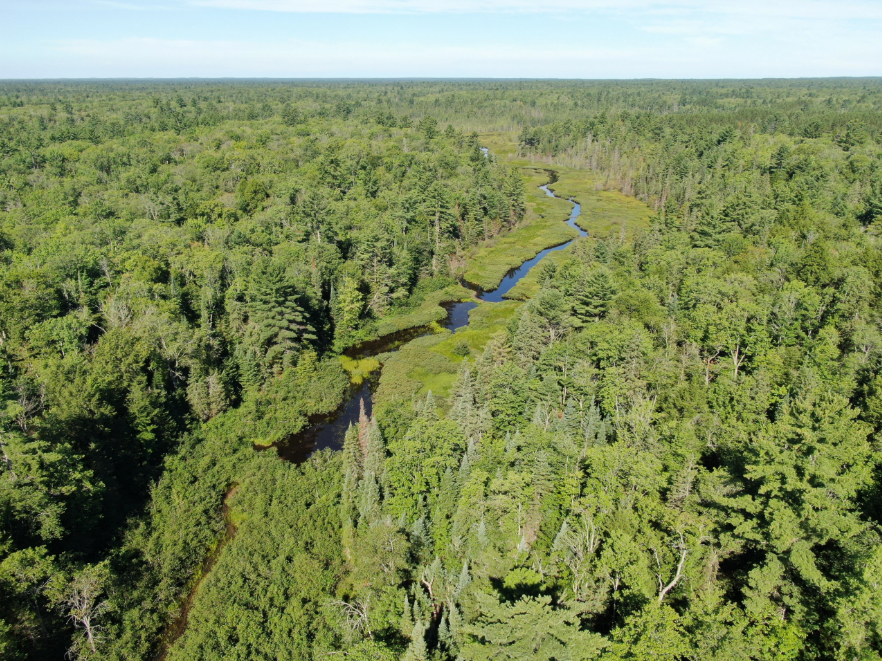
At Huber Resources Corp. (HRC), we believe in creating lasting environmental and community impacts through thoughtful and sustainable conservation projects. In the Upper Peninsula of Michigan, our team recently completed a pivotal project on the Fox River, and its tributary Casey Creek, replacing two failing culvert road crossings with clear-span bridges. Our efforts not only improved stream function and fish passage but also enhanced water quality and habitat for native species — all made possible through a state grant and a team effort within our company.
What makes Fox River special?
The Fox River is held in high esteem by anglers for its renowned brook trout fishery. What makes this river, and its tributaries like Casey Creek, such a premier trout habitat lies in the river’s lack of development and untouched characteristics through most of its course. It has no industrial uses, limited timber harvesting and only a small number of residential properties along its banks. Vegetation is plentiful along the banks, keeping water temperatures cool for aquatic species like trout and filtering sedimentation, resulting in improved water quality. The Fox River is one of 16 designated Natural River systems in Michigan and only one of two in the Upper Peninsula.
Ernest Hemingway’s 1925 short story “Big Two-Hearted River” is thought to take place on the Fox River. It is also speculated that Hemingway used the title “Two Hearted River” not only for aesthetic benefit but also to hide the identity of Fox River, the very place he went to fish. This story was inspired by a fly-fishing trip to nearby Seney, Michigan, that Hemingway embarked on in 1919. During the trip, he camped along the banks of the river and wrote about the impressive quality and size of the brook trout he saw as well as the scenic backdrop provided by the river itself.
What was threatening Fox River’s ecosystem?
Huber Resources Corp. manages Seven Lakes Forest Reserve, a property owned by the Woollam Foundation, a philanthropic conservancy that has protected thousands of acres of North American land and water with a concentration on water quality protection. The Seven Lakes Forest Reserve was established in 2007 to protect the headwaters of Fox River.
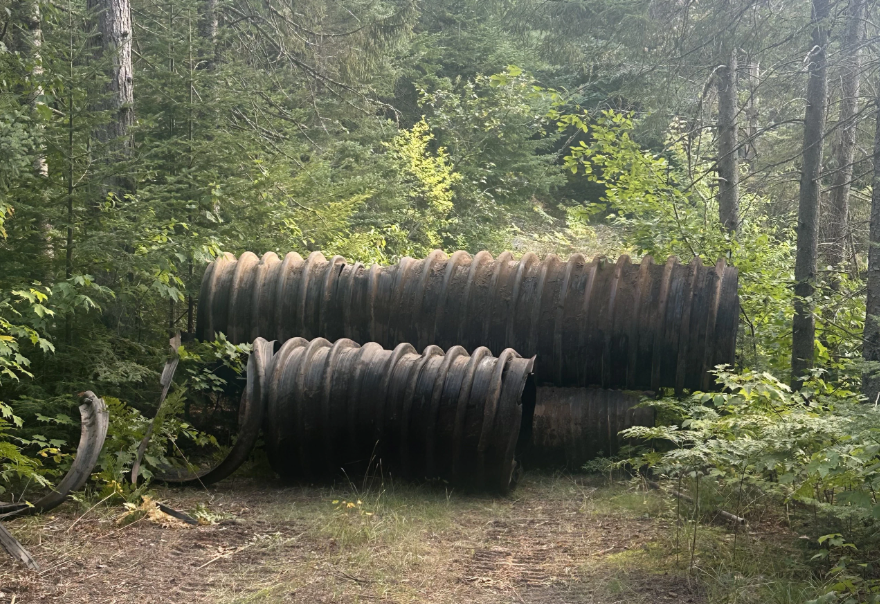
Decades after their installation, the original culverts reached the end of their functional life. The culverts were not only structurally failing, but their perched position disrupted natural stream flow and blocked aquatic species, especially native brook trout, from reaching critical spawning habitat upstream. During high flow events, the undersized and failing culverts increased downstream sedimentation, resulting in a degradation of water quality. These crossings also posed a public safety hazard, as the crossings are part of the main road system utilized by vehicle and foot traffic within the preserve.
How did HRC support Fox River’s restoration?
In fall 2023, HRC explored grant funding options to assist with the cost of replacing the failing culvert pipes with clear-span bridges. Based in HRC’s Marquette, Michigan, office, Graham Fox, Assistant Operations Forester, led the search for the project’s funding. After exploring options provided by national, state, and local organizations, HRC applied for a Michigan Department of Natural Resources Fisheries Habitat Grant. In April 2024, we received notice that the project on Fox River and Casey Creek was approved for funding. Graham secured the permitting required to move forward, while Dave Boehlke, Operations Manager at HRC, led the design of the new bridges, which focused on restoring the natural flow and habitat connectivity of Fox River and Casey Creek.
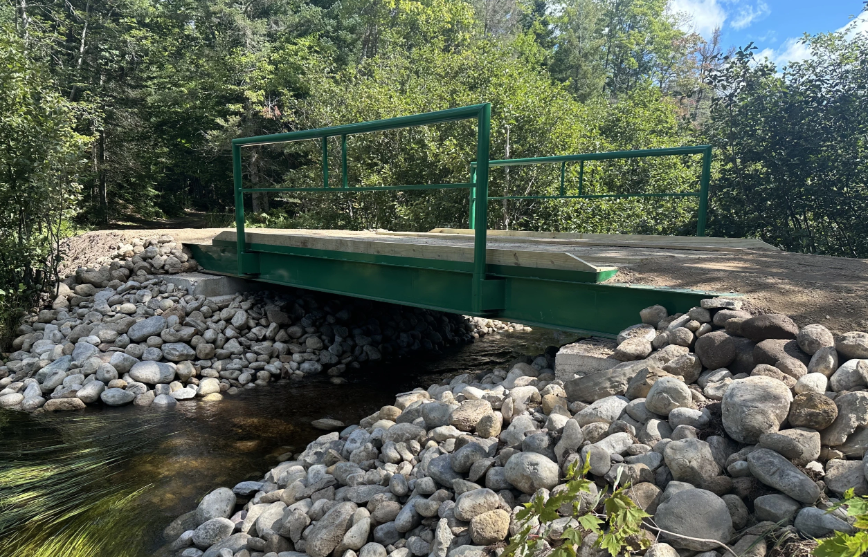
The new bridges were engineered to span the full width of each stream channel, eliminating barriers and allowing fish and other aquatic organisms to move freely once again. To further protect the site, the streambanks were armored with rounded field stone riprap, which stabilizes the banks, prevents erosion and sedimentation and enhances habitats for aquatic invertebrates and amphibians. The bridges were installed in August 2025 by a local contractor with HRC providing onsite support and oversight throughout the installation process.
What were the results of HRC’s work?
With the bridges now in place, Fox River and Casey Creek have been reconnected with an additional three miles of upstream waterways and 16 acres of upstream lakes. Native trout populations can now traverse these crossings to the very headwaters of Fox River and Casey Creek to vital spawning habitat. The new bridges are also better suited for high water flow events, reducing erosion and sedimentation that would degrade overall water quality. As the managers of the preserve, we are excited to continue monitoring the long-term ecological benefits of this project and sharing updates with our partners.
Through this culvert replacement project, the preserve is now more resilient and supportive of native species. This was all made possible with the support of the Michigan DNR Fisheries Habitat Grant Program and a generous matching contribution from the Woollam Foundation, covering the cost of design, fabrication and installation of the bridges. The project serves as a model we hope to replicate on other properties and in partnership with other landowners. We are grateful to all of our partners for their lasting investment in a conservation-focused project and the opportunity to lead a project that aligns with J.M. Huber Corporation’s mission to improve lives – and in this case, habitats – for generations.
A Special Note on Funding:
Huber Resources Corp. is excited to include grant writing and permitting support for similar projects within the Lake States region. Navigating the funding and regulatory process can be overwhelming, especially for private landowners or smaller organizations. Our experience and expertise have shown how critical funding is in making these projects happen. By offering this service, we hope to empower others to improve habitat and protect water quality on their own lands.